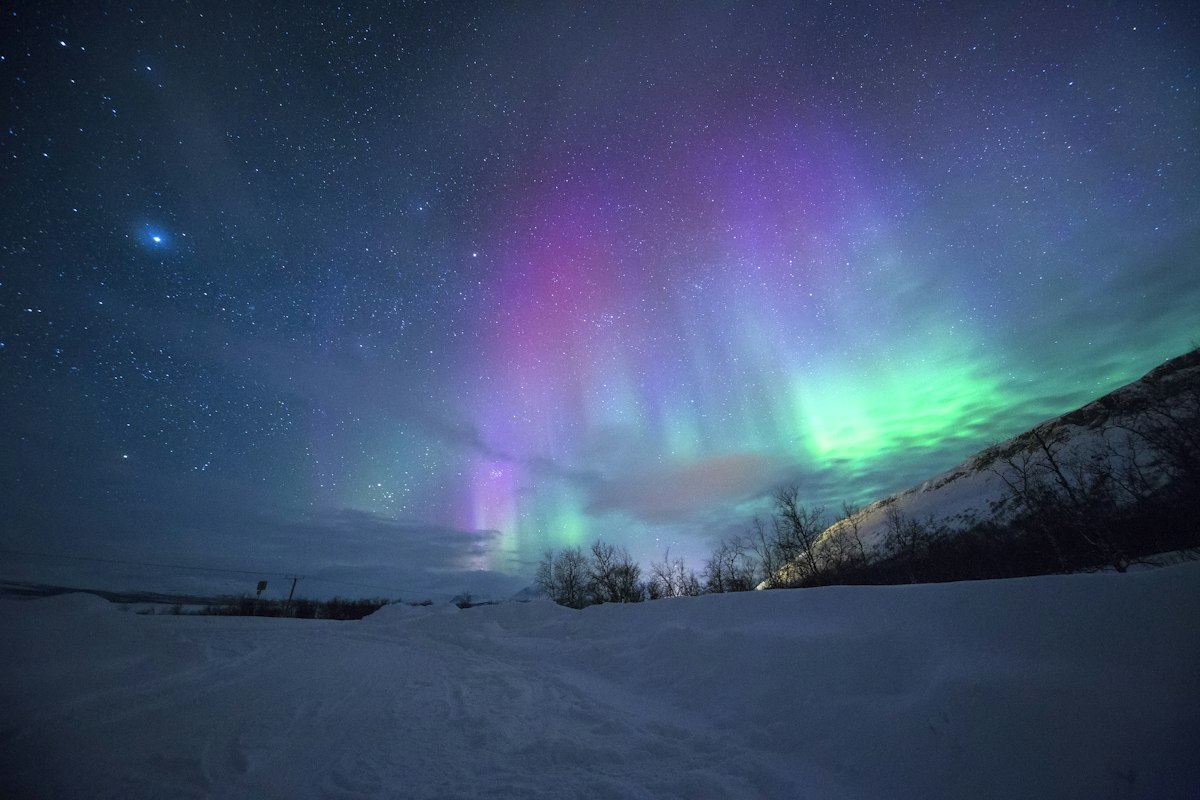
Northern Lights Events and Viewing in Alaska 2026-2027
Alaska and the Northern Lights: The Ground Truth
Alaska is one of the best places on earth to see the aurora borealis. Fairbanks sits directly under the auroral oval — the ring around the magnetic pole where aurora activity is most concentrated — and records aurora on more than 200 nights per year. The aurora is not a seasonal phenomenon here; it is a year-round one interrupted only by the midnight sun of summer. This guide covers the viewing calendar, the best locations, and events built specifically around the northern lights.
When to Go: The Aurora Calendar
The aurora requires three things: geomagnetic activity (driven by the sun), darkness, and clear skies. In Alaska, the viewing season runs from late August through late April — the window when nights are dark enough to see the display. Peak aurora activity statistically aligns with the equinoxes (mid-September and mid-March), when Earth's magnetic field is best oriented to interact with solar wind. February and March are considered the most productive months in practice because days are lengthening (improving travel conditions) while nights are still fully dark, and clear weather is more common than in autumn.
- Late August – September: First dark nights return; warm shoulder season weather; equinox activity boost in mid-September
- October – November: Reliable darkness; weather variable; good aurora frequency
- December – January: Maximum darkness; cold (-30°F to -50°F possible in Fairbanks); very low humidity means excellent sky clarity on calm nights
- February – March: Most popular aurora travel window; improving temperatures; equinox activity boost in mid-March; Iditarod race weekend adds a travel hook
- April: Nights shortening fast; last reliable dark window before summer
Best Aurora Viewing Locations in Alaska
Fairbanks is the center of Alaska's aurora tourism industry and the most reliable location. Key viewing spots:
- Chena Hot Springs Resort (60 miles northeast of Fairbanks): fully dark skies, natural geothermal pools for warming between shots, guided aurora tours, and an on-site aurora viewing dome with heated interior. Overnight packages include wake-up calls when aurora is active.
- Cleary Summit on the Steese Highway: 20 miles from Fairbanks, 2,233-foot elevation, open sightlines north
- Murphy Dome northwest of Fairbanks: accessible by road, 2,940 feet elevation, 360-degree horizon
- Ester Dome west of Fairbanks: active aurora viewing community, accessible in winter with 4WD
Talkeetna (170 miles north of Anchorage): dark skies with Denali as a foreground element on clear nights; aurora visible 50–80 nights per year in active seasons. Best spot is the river flats at the end of Main Street.
Anchorage surrounding areas: the city itself is too light-polluted, but Turnagain Pass (60 miles south on the Seward Highway) and the Hatcher Pass area (60 miles north via Palmer) provide dark-sky access within 90 minutes.
Nome: the Bering Sea coast provides an extreme western Alaska aurora viewing experience with minimal light pollution. Nome is fly-in from Anchorage (Alaska Airlines); the aurora over the sea ice or tundra is among the most remote and dramatic settings available.
Aurora Events and Packages in 2026–2027
Several Alaska tourism operators have built structured aurora experiences around the peak viewing windows:
- Chena Hot Springs Aurora Packages (October–April): multi-night packages include guided aurora tours, soak access, and the glass-roofed Aurora Ice Museum. Booking opens roughly 60 days in advance; the December–January peak fills quickly.
- Borealis Basecamp near Fairbanks: aurora domes — heated glass-roofed pods allowing viewing from a warm interior — have become popular additions to the Fairbanks aurora itinerary. Several operators offer dome accommodations 20–40 miles outside Fairbanks.
- Northern Alaska Tour Company: runs fly-drive packages from Fairbanks to Coldfoot in the Brooks Range for aurora viewing under an essentially unpolluted sky in one of the darkest corridors accessible by road.
- Iditarod aurora window: The Iditarod Ceremonial Start (first Saturday of March in Anchorage) and Official Restart (Sunday, Willow) fall within one of the best aurora windows. Combining the race with aurora viewing near Talkeetna or Fairbanks makes March the most event-dense aurora travel window.
Solar Cycle 25 and the 2026–2027 Outlook
The sun operates on an 11-year cycle of activity. Solar Cycle 25 peaked in late 2025 and is expected to remain near peak activity through 2026, with elevated geomagnetic storm frequency into 2027. This means aurora activity in 2026–2027 is projected to be significantly higher than the low-activity years of 2019–2022. Strong geomagnetic storms (Kp 7+) during this period can produce aurora visible across the continental United States; in Fairbanks, the same storms produce curtains that fill the entire sky. The 2026–2027 window is genuinely one of the best aurora viewing opportunities in a decade.
Forecasting Tools
- NOAA Space Weather Prediction Center: swpc.noaa.gov — free 3-day Kp forecast and 30-minute short-range forecast
- SpaceWeatherLive app: push notifications when Kp crosses your threshold
- Geophysical Institute, UAF: the University of Alaska Fairbanks publishes a daily aurora forecast specific to Alaska viewing conditions
The northern lights are the reason many people put Alaska on their bucket list. And while you can never guarantee an aurora display, Alaska offers some of the best odds on the planet -- especially during the 2026-2027 season, which falls near a solar maximum cycle that produces more frequent and vivid aurora activity.
Looking for things to do in Alaska? Browse upcoming Alaska events →