Safety guide
Bore Tide Surfing Safety
What you need to know before you paddle out — gear, training, and the risks most people underestimate
Water temp
38–48°F year-round
Wetsuit min
5mm full suit
Leash
Mandatory — no exceptions
Training
TA Surf guided sessions
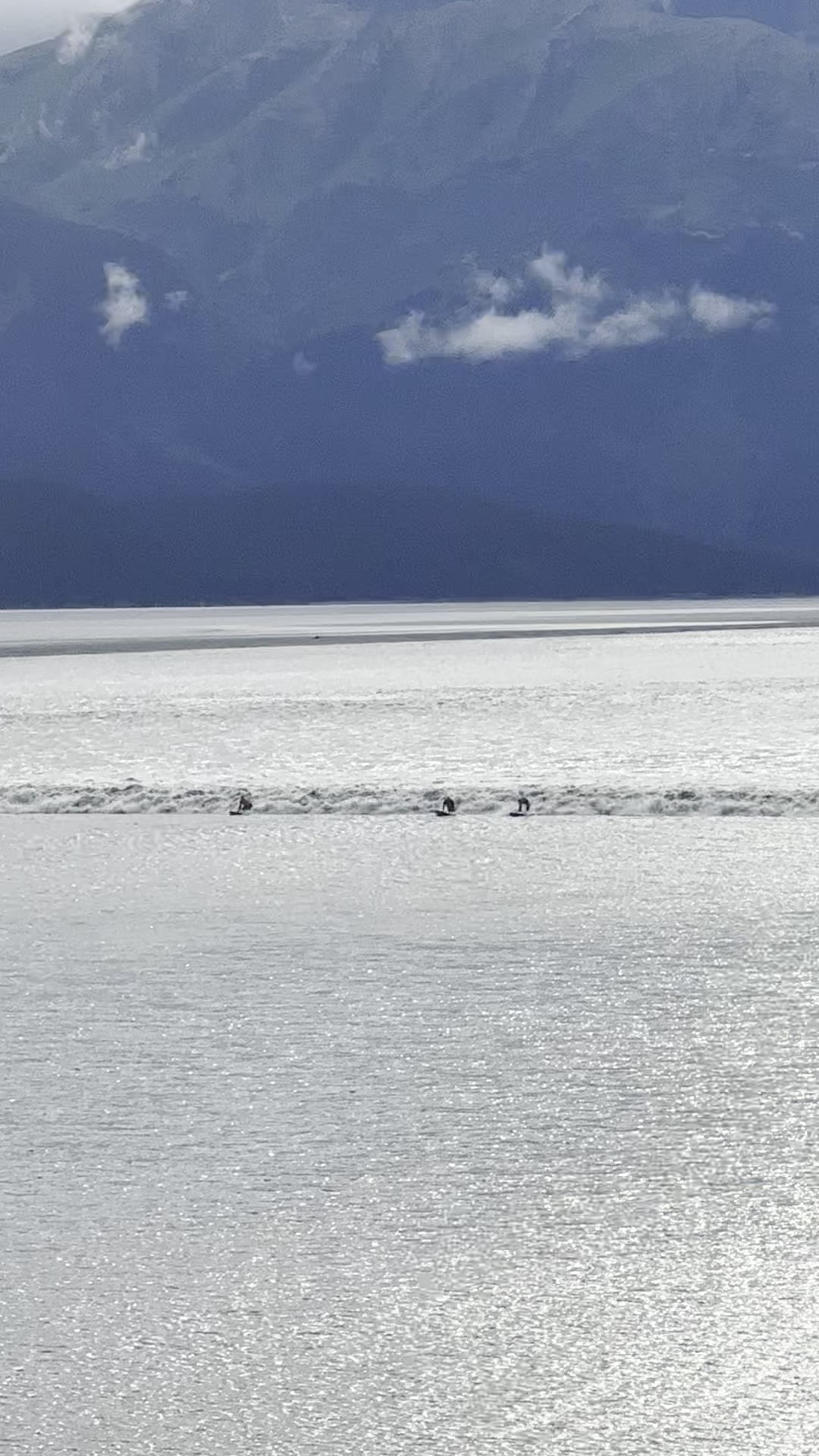
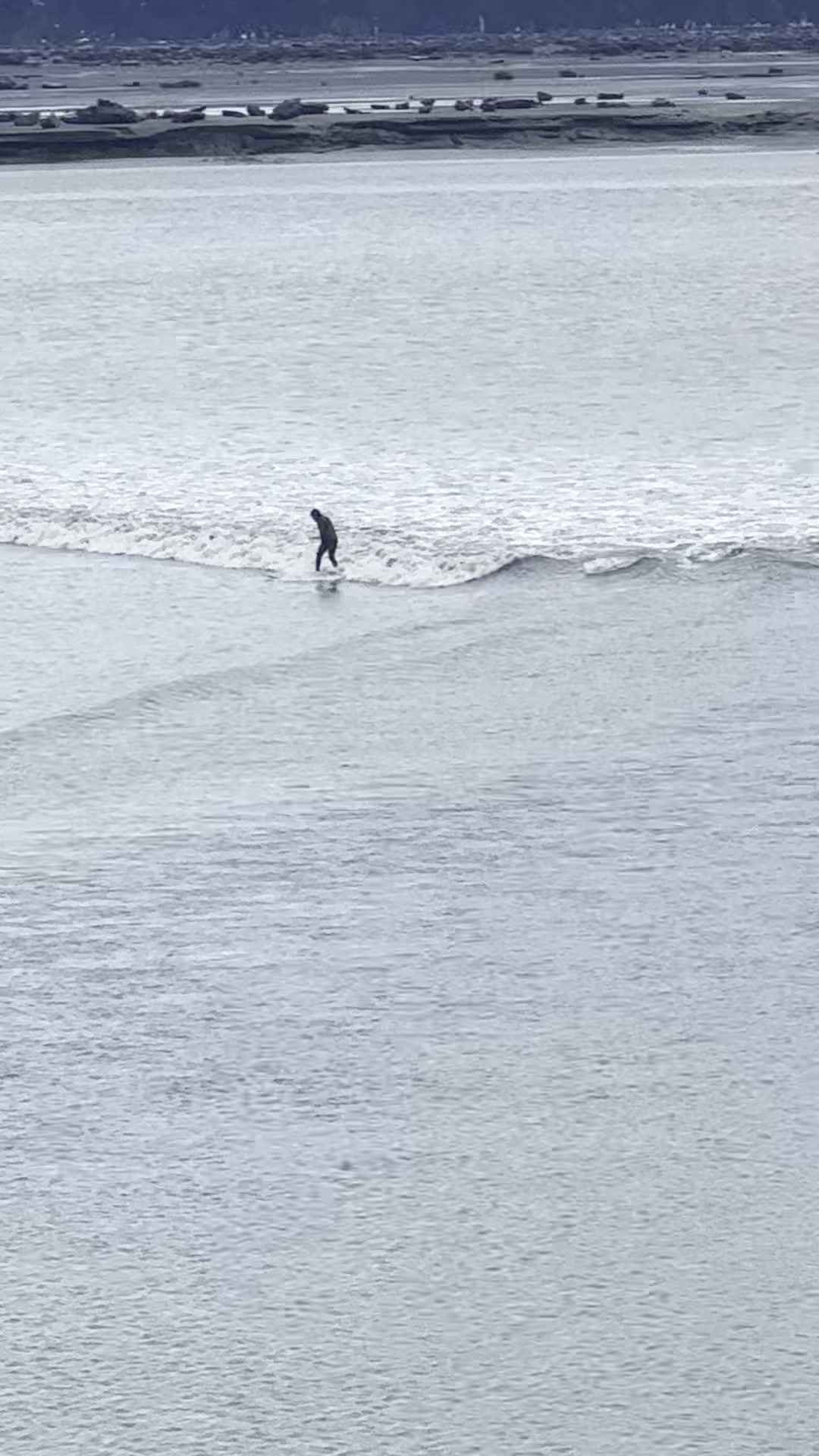
The Turnagain Arm bore tide is one of the most surfable tidal bores on earth, but it runs through some of the most hazardous water in Alaska. Cook Inlet water hovers between 38–48°F year-round. The mudflats are glacial silt that behaves like quicksand. The bore arrives on a fixed schedule and waits for no one. Every surfer who has had a serious incident on this wave was underprepared in at least one of the areas below.
Featured partner
Advertise to bore tide visitors
This spot reaches people actively planning a bore tide trip to Turnagain Arm. Perfect for surf schools, wetsuit rental, Girdwood lodging, guided tours, or gear shops.
Inquire → [email protected]5mm wetsuit — non-negotiable
A 5mm full wetsuit is the minimum for Turnagain Arm. At 38°F water, cold shock can cause involuntary gasping and cardiac arrest within seconds of immersion. Without a wetsuit, meaningful swimming ability disappears in under 3 minutes. Add 5mm booties, 3–5mm gloves, and a hood — the water is this cold even in July. Many experienced bore surfers add a 3mm shorty under their 5mm suit for extra insulation on long sessions. An impact vest is strongly recommended for larger bores.
Leash — always, no exceptions
An ankle leash is mandatory. Losing your board in Turnagain Arm means swimming in 40°F glacial water with a current that can exceed 10 knots behind the bore. Recovery is extremely difficult and hypothermia sets in within minutes. Use a surf leash rated for the conditions — a standard shortboard leash is adequate, but a coiled SUP leash reduces drag in the current. Check the leash and cuff before every session; saltwater and glacial silt are hard on hardware.
The mudflat trap — #1 hazard for spectators
The exposed mudflats between tides look solid but are glacial silt that behaves like quicksand. People have been trapped waist-deep and drowned when the bore arrived before rescuers could extract them. The rule is absolute: never step onto the Turnagain Arm mudflats, ever. The silt can swallow a boot in seconds and you will sink deeper trying to pull yourself out. Spectators must stay on the road berm. Surfers enter the water only from established rocky points or gravel beaches — never by walking across the flat.
Surf with others — never alone
Always surf the bore with at least one other person in the water, and at least one person on shore who knows your plan. The shore spotter's job is to watch your entry and exit point, have a rescue throw bag ready, and know when to call for help. Cell service is unreliable along the Seward Highway — the shore spotter should have a plan that does not depend on calling 911 in real time. If you are separated from your board and the current takes you, a shore spotter is the difference between a rescue and a recovery.
Get proper training before paddling out
Turnagain Arms Surf (TA Surf) runs guided bore tide sessions with local experts who know the wave intimately — timing windows, entry/exit logistics, how the bore behaves under different tidal ranges, and what to do when things go wrong. If you have not surfed a tidal bore before, a guided session is not optional. The bore is not like ocean surf: it does not break and reform, it does not have a lineup, and it does not have a channel. TA Surf provides the coaching, local knowledge, and safety backup that turns a dangerous experiment into a legitimate surf session.
Know your entry and exit before you paddle out
Identify and memorize your exit point before the bore arrives. Once you are in the water riding the bore, the wave will carry you downstream — you need to know exactly where you are getting out, and that point needs to be reachable. Common exit points near Girdwood are the rocky points just east of the pullouts. Do not assume you can improvise. The bore does not give you time to look around. Paddle out 20–30 minutes before the predicted arrival time to position yourself and scout the exit in daylight.
Arrive 45 minutes early — the bore does not wait
Our live schedule gives times ±15 minutes. Wind, river outflow, snowmelt, and barometric pressure all affect bore speed and size. Arriving at predicted bore time means you may be scrambling to get in the water as the wave approaches. Arrive 45 minutes early: check conditions, identify your exit, stretch, talk through the plan with your group, and be in position 20 minutes before the predicted arrival. Rushing into the water as the bore appears is how people get hurt.
Secondary waves and post-bore current
The primary bore is followed by secondary chop, standing waves, and turbulent whitewater that can last 10–20 minutes. Stay on your board through the secondary waves — the water moving behind the bore is fast, confused, and opaque with silt. You cannot see obstacles below the surface. The post-bore current flows strongly up-arm; use it to travel toward your exit point but be aware that it is moving you whether you want it to or not. Experienced surfers ride the primary bore, then work with the secondary wash to reach the exit.
Large bore days — extra caution
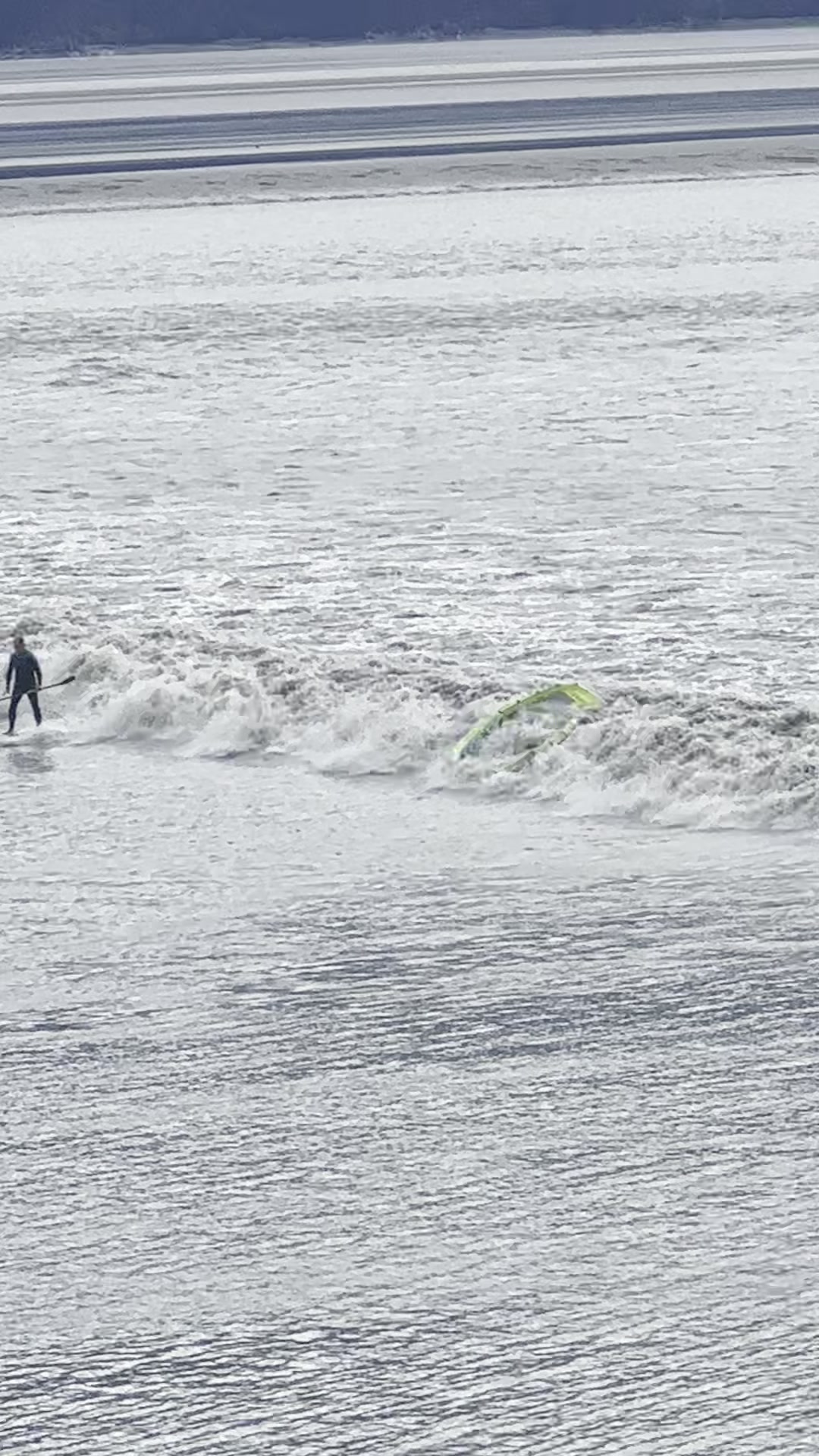
Bores rated Large (tidal range 29+ ft at Anchorage) produce the most powerful waves — and the most unpredictable ones. The wave face is taller, faster, and the secondary chop behind it is significantly more violent. If you are new to bore surfing, start on Good days (27–29 ft range) where the wave is substantial but more forgiving. Large bores attract experienced surfers, kiters, and SUP paddlers — they also concentrate risk. Follow the lead of experienced locals and do not let crowd energy push you beyond your ability.
Williwaw winds — no warning
Turnagain Arm is one of the windiest corridors in Alaska. Katabatic winds called williwaws can funnel off the Chugach peaks and hit the arm surface at 60–100+ mph with almost no warning — calm to violent in under a minute. A williwaw on the water during a bore tide session is a life-threatening emergency. Check the National Weather Service Anchorage forecast before every session, and watch the mountain slopes for the rotor cloud signature that often precedes a williwaw. If local surfers are leaving the water, leave with them.
Communications and float plan
Cell service is patchy to nonexistent along much of the Seward Highway bore tide corridor. Do not rely on your phone for emergency contact. A satellite communicator (Garmin inReach or SPOT) is the right tool for a session at Girdwood Flats or Hope — anywhere a rescue call might not get through on a cell network. Before every session, leave a float plan with someone not at the session: where you are surfing, who is in the water, your planned exit time, and what to do if they do not hear from you by a specific time. Alaska State Troopers: 907-745-2131.
Hypothermia — know the signs
Hypothermia begins at a core temperature of 95°F and progresses fast in 40°F water. Early signs: intense shivering, loss of fine motor control, fumbling with gear. If you or anyone in your group shows these signs, exit the water immediately and begin rewarming — remove wet gear, add dry insulating layers, use a vehicle heater. Do not give alcohol. Mild hypothermia resolves with rewarming; moderate to severe hypothermia (confusion, slurred speech, loss of shivering) is a medical emergency — call 911 and keep the person horizontal and still until EMS arrives.
Pro tip
TA Surf (Turnagain Arms Surf) is the local authority on bore tide surfing — find them online for guided sessions, clinics, and up-to-date local conditions. If you are going out without a guide, the minimum viable safety setup is: 5mm suit + hood + gloves + booties, ankle leash, shore spotter, satellite communicator, and someone at home with your float plan.
More bore tide guides
Hope / Mile 13
South shore quiet — the best unobstructed bore tide view, 45 min ahead of Girdwood
Bird Point (MP 96)
The best Seward Highway pullout — wide views, parking, and minimal trail to the shore
Beluga Point (MP 110)
Closest to Anchorage — also one of the best spots to see Cook Inlet belugas
Girdwood Flats (MP 90)
The most-watched bore tide location — pullouts #4 and #5, classic Seward Highway vantage