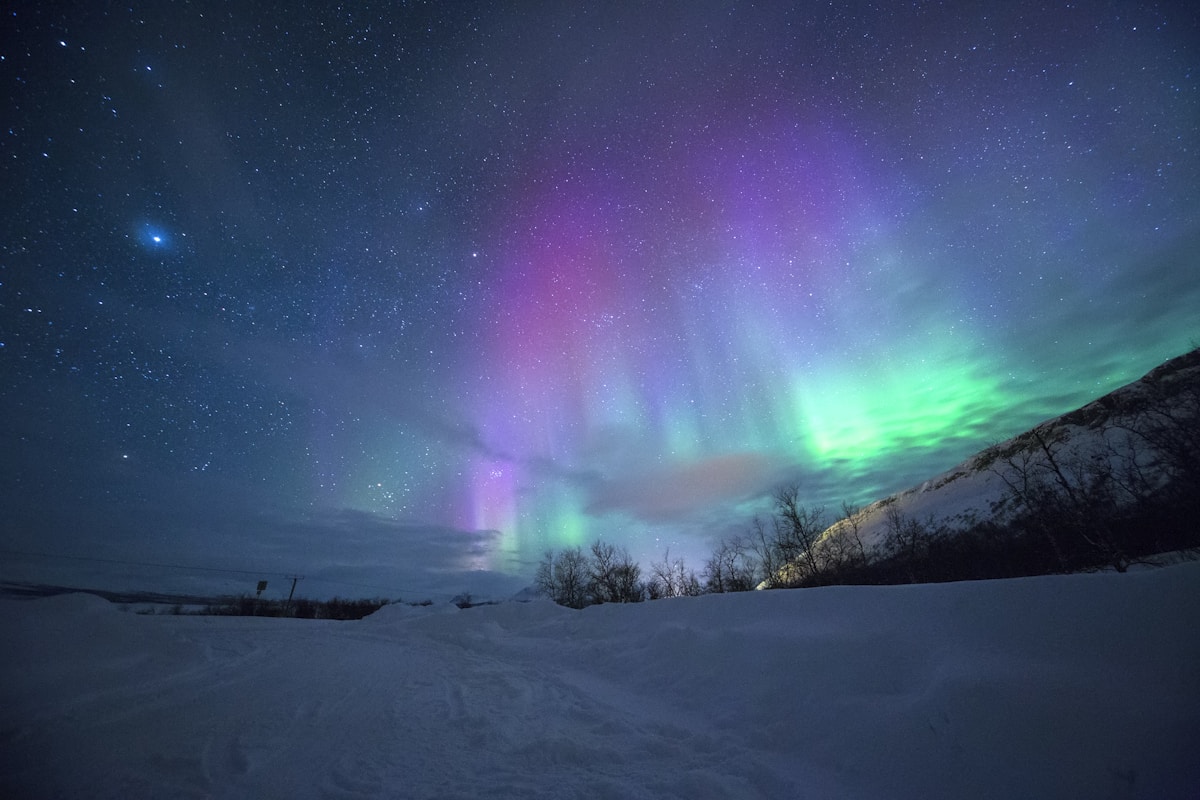
Alaska Northern Lights Guide 2026 — Best Time, Best Spots & How to See the Aurora
Why Alaska for the Aurora
Fairbanks sits directly under the auroral oval — the ring around the magnetic pole where geomagnetic activity is most concentrated. On a clear night with even moderate solar activity (KP index 3 or higher), you can see the northern lights from within city limits. This is not a bucket-list long-shot. With the right timing and basic preparation, aurora viewing in Alaska is reliable.
Best Time of Year
The aurora is present year-round but invisible in summer because Alaska doesn't get dark enough from late May through late July. The viewing season runs roughly August through April. February and March are the peak months: the nights are long and dark, solar activity tends to be elevated around the equinoxes, and temperatures, while cold, are manageable compared to December and January. Late August and September offer a good combination of darkness and bearable weather for visitors who don't want to deal with -30°F.
Best Locations Near Fairbanks
Cleary Summit on the Steese Highway, about 20 miles from Fairbanks, is the most accessible dark-sky viewing point. It's a pullout with a wide northern horizon and enough elevation to clear the city glow. Murphy Dome Road (unpaved, check conditions) gets you even further from light pollution. Both are free, no permit required, and accessible by regular car in reasonable winter conditions.
Chena Hot Springs Resort, 60 miles northeast of Fairbanks, is the most comfortable aurora viewing option in Alaska. You can soak in a 106°F mineral pool while watching the lights overhead. The resort has an aurora alert system that wakes guests when activity spikes. Rooms run 00–350/night in winter. It books up — reserve in advance for February and March.
Wiseman, about 100 miles north of Fairbanks on the Dalton Highway, offers some of the darkest skies accessible by road in the entire state. It's a tiny community of fewer than 20 residents. You'll need a high-clearance vehicle for the Dalton in winter, but the sky quality is exceptional.
Forecasting the Aurora
The NOAA 3-day geomagnetic forecast is your primary planning tool. The SpaceWeatherLive app is the most useful mobile option — it gives real-time KP index readings and short-term forecasts. For Fairbanks, KP3 is often enough to see activity. For Anchorage, you typically need KP5 or higher because of the city's lower latitude. A clear sky matters more than raw KP — aurora through clouds is invisible. Check weather forecasts alongside geomagnetic ones.
What to Bring
In February, Fairbanks temperatures regularly hit -20°F to -40°F. Dress in true cold-weather layers: base layer, insulating mid-layer, windproof outer shell, insulated boots rated to -40°F, hand warmers, and a neck gaiter. Chemical hand warmers tucked into your camera bag protect batteries, which die fast in extreme cold. Bring a headlamp with a red-light setting to preserve night vision.
Photography Basics
Use a wide-angle lens (24mm or wider on full-frame), a sturdy tripod, and a remote shutter release. Set ISO to 1600–3200, aperture to f/2.8 or your widest available, and start with a 15–25 second exposure. Bright aurora may require shorter exposures (5–10 seconds) to preserve detail. Focus manually to infinity — autofocus fails in the dark. Turn off in-body stabilization when on a tripod.
Looking for things to do in Alaska? Browse upcoming Alaska events →