Bore Tide Science
How Bore Tides Work
The physics behind one of Alaska's most dramatic natural events — and how Turnagain Arm became a world-class tidal bore
Bore height
Up to 6 ft (large tides)
Speed
10–15 mph up-arm
Tidal range
Up to 42 ft at Anchorage
Frequency
Twice daily
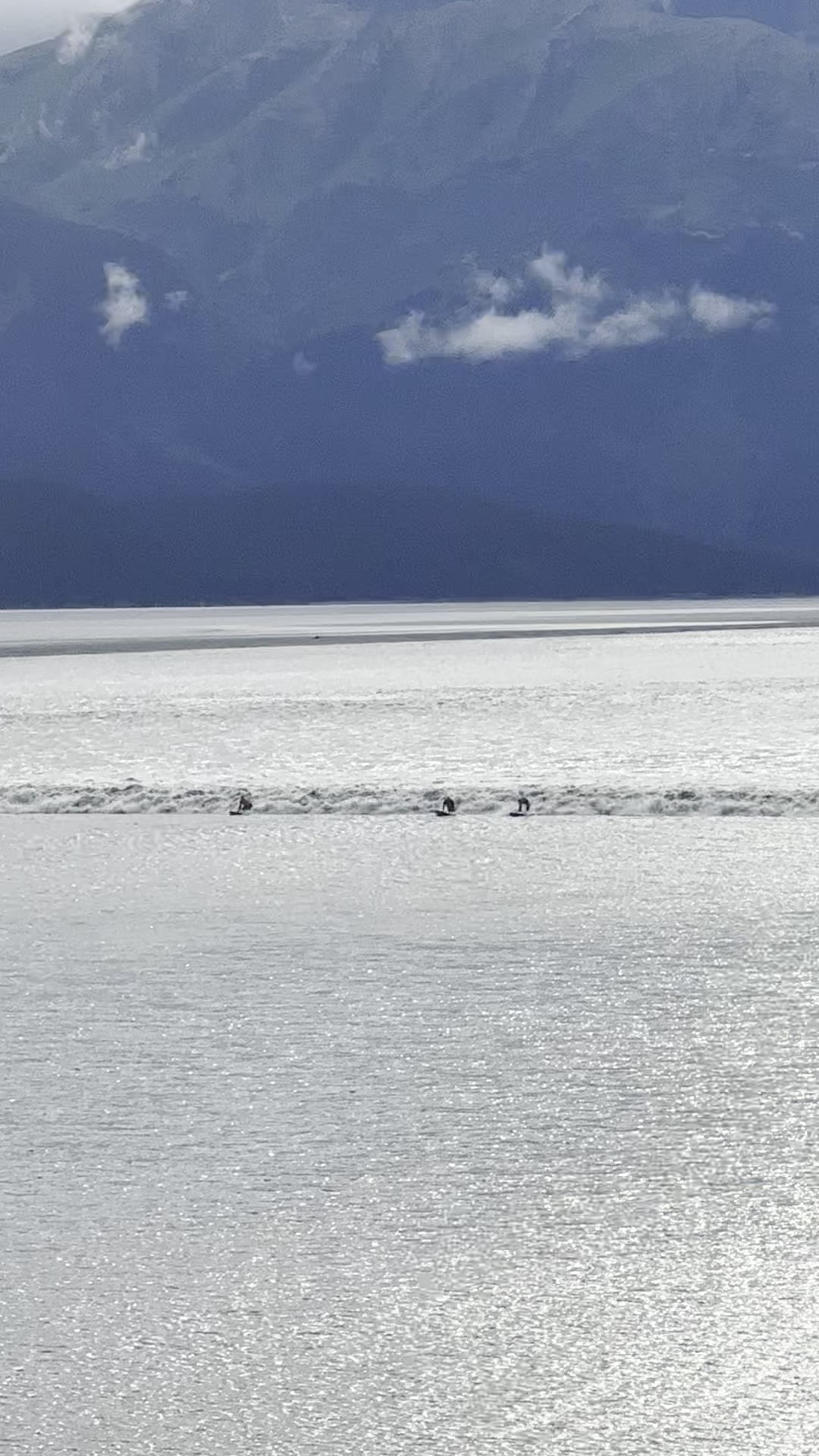
The Turnagain Arm bore tide is one of the largest and most consistent tidal bores on earth — a wall of water that forms twice daily and travels 40 miles up a glacial fjord at highway speeds. Cook Inlet's extraordinary 42-foot tidal range, the funnel shape of the arm, and the glacial silt that turns the wave brown and audible from a mile away combine to create something genuinely rare: a large, reliable, roadside-accessible tidal bore. Understanding the physics makes watching it more profound.
Featured partner
Advertise to bore tide visitors
This spot reaches people actively planning a bore tide trip to Turnagain Arm. Perfect for surf schools, wetsuit rental, Girdwood lodging, guided tours, or gear shops.
Inquire → [email protected]What is a tidal bore?
A tidal bore forms when an incoming tide is funneled into a narrowing, shallow body of water faster than the water can spread out horizontally. The rising tide builds against itself and forms a wave front — a bore — that travels inland against the flow of the river or inlet. Bores range from barely visible ripples to walls of whitewater 30 feet tall. The key ingredients are: a large tidal range, a funnel-shaped channel, and shallow water that resists the incoming volume.
Why Cook Inlet creates a bore
Cook Inlet is a textbook bore-generating system. It stretches nearly 200 miles from its wide mouth near Kodiak Island to the narrow upper reaches at Anchorage — a classic funnel shape. The tidal range at Anchorage is up to 42 feet, among the highest on earth (the Bay of Fundy averages 47 feet; Anchorage competes for the North American record on king tides). Turnagain Arm at the east end of Cook Inlet narrows further still — from a mile wide at Portage to a few hundred yards near Girdwood — which compresses and amplifies the bore as it travels.
How the bore forms and travels
The bore forms at the mouth of Turnagain Arm near Potter Marsh (MP 115) shortly after Anchorage low water and travels east at 10–15 mph. As the arm narrows toward Girdwood, the bore grows in height — a wave that's 1 foot tall at Beluga Point may be 3–4 feet at Bird Point and 5–6 feet at Girdwood on a large-tide day. The tidal range at the preceding low determines size: a 30-foot range produces a modest bore; a 38-foot range produces a substantial one; 40+ feet produces the large-bore events that bring out surfers and kiters.
Reading the bore's arrival
The bore announces itself acoustically before it's visible: a low roar like distant highway traffic that builds over 3–5 minutes. The water surface ahead of the bore is flat and calm; behind it is churned brown silt and whitewater. On large days the wave face is 4–6 feet tall and nearly vertical; on small days it's 1–2 feet of rolling water still visible from shore. Color is a clue to size — a larger bore suspends more glacial silt, producing a darker brown wave audible from further away.
The world's great bore tides
Bore tides occur on about 60 rivers and inlets worldwide. The Bay of Fundy (Canada/US) is most famous — 47-foot tidal range, the Petitcodiac River bore travels over 50 miles. The Qiantang River (China) produces a bore up to 30 feet tall during king tides, watched by millions annually. The Amazon's pororoca ('great roar') can travel 500+ miles inland and last hours. The Severn Bore (England) is Europe's top bore surf destination. Turnagain Arm ranks consistently among the top five in the world for bore height, reliability, and accessibility.
What makes Turnagain Arm special
Most large bores are remote or require permits to watch. Turnagain Arm is unique: the Seward Highway runs the entire length of the arm, with pullouts every few miles that put you within 50 feet of the bore's path. The glacial silt suspended in the water makes the wave visually dramatic against the surrounding snow and rock — dark brown on white. And the arm's orientation means the bore travels directly toward you if you face east from any of the highway pullouts, giving a head-on view of the wave approaching.
Pro tip
The bore's sound is your earliest warning — listen for the low roar 3–5 minutes before it arrives. That's your cue to stop talking, face down-arm (west), and watch the bore approach.
More bore tide guides
Hope / Mile 13
South shore quiet — the best unobstructed bore tide view, 45 min ahead of Girdwood
Bird Point (MP 96)
The best Seward Highway pullout — wide views, parking, and minimal trail to the shore
Beluga Point (MP 110)
Closest to Anchorage — also one of the best spots to see Cook Inlet belugas
Girdwood Flats (MP 90)
The most-watched bore tide location — pullouts #4 and #5, classic Seward Highway vantage
Bore Tide Surfing Safety
What you need to know before you paddle out — gear, training, and the risks most people underestimate
Wildlife on the Bore Tide
Harbor seals body-surf it. Beluga whales follow it. Bald eagles feed in its wake. The bore tide brings Turnagain Arm to life.