Bore Tide · Seward Highway
Potter Marsh (MP 115)
Where the bore begins — the closest bore tide viewpoint to Anchorage, paired with world-class boardwalk birding
Location
MP 115, Seward Highway
Bore arrives
~1h 10min after Anchorage low
Drive from Anchorage
~10 min
Bonus
Boardwalk birding trail (free)
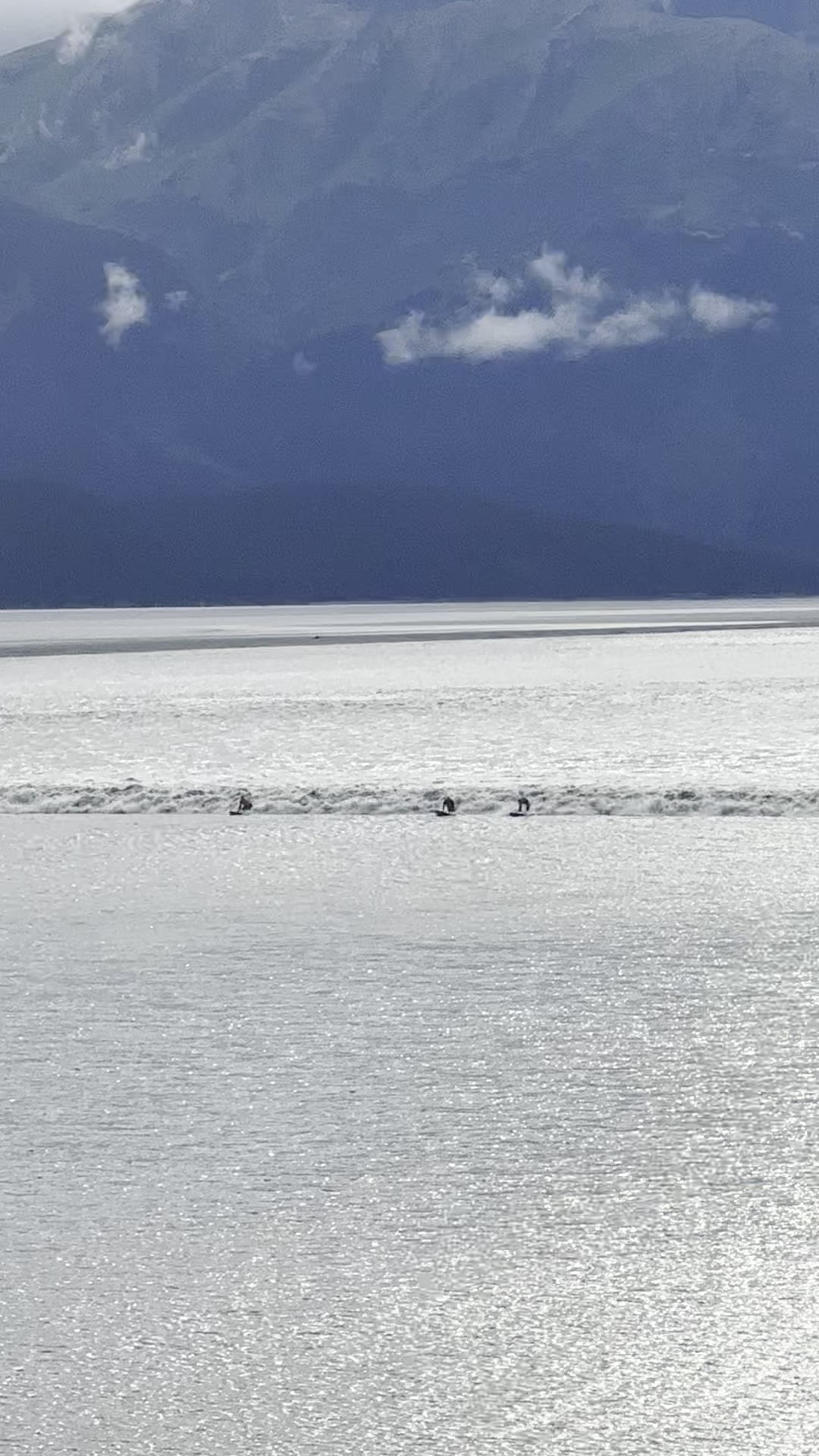
Potter Marsh at MP 115 on the Seward Highway is where the Turnagain Arm bore tide forms. Sitting at the mouth of the arm just 10 minutes south of Anchorage, this is the first place the bore wave becomes visible after Anchorage low water — and the only spot where you can watch the bore in its earliest stage before it grows and compresses as it travels east toward Girdwood. The site doubles as one of the most productive birding locations in Southcentral Alaska, with a free 1,100-foot boardwalk overlooking a shallow freshwater marsh that attracts nesting waterfowl, arctic terns, shorebirds, and trumpeter swans.
Featured partner
Advertise to bore tide visitors
This spot reaches people actively planning a bore tide trip to Turnagain Arm. Perfect for surf schools, wetsuit rental, Girdwood lodging, guided tours, or gear shops.
Inquire → [email protected]Where the bore forms
Potter Marsh sits at the western mouth of Turnagain Arm where Cook Inlet's tidal volume is first funneled into the narrowing channel. The bore wave forms here — roughly 70 minutes after Anchorage low water — and then travels 40 miles east, growing taller and more powerful as the arm narrows toward Girdwood. At Potter, the bore is in its earliest and lowest stage: visible as a distinct wave front, but not yet the wall of water it becomes at Bird Point or Girdwood. It's where everything starts.
Potter Marsh Wildlife Refuge boardwalk
The 1,100-foot boardwalk at Potter Marsh is one of the best free birding spots in Anchorage. The shallow freshwater marsh hosts nesting arctic terns, red-necked grebes, trumpeter swans (in spring), coots, and a dozen species of dabbling ducks. In fall, shorebird diversity peaks as species move through on migration. The boardwalk is paved and accessible, runs along the west side of the New Seward Highway, and has no fee. Pair it with a bore tide stop and you have one of the most wildlife-dense two-hour outings in Southcentral Alaska.
Watching the bore at Potter
The bore arrives 40–45 minutes earlier at Potter than at Bird Point. If you want to see two phases of the same bore in one trip — the early, wide-arm version and the taller, compressed version further up — start at Potter and then drive south to Beluga Point or Bird Point. The bore will still be running by the time you arrive. Parking is available at the boardwalk lot off the New Seward Highway frontage road.
Winter bore tide and shore ice
Turnagain Arm can partially freeze in winter, and watching the bore break through shore ice is a dramatic experience rarely photographed. When the tidal differential is large and temperatures are well below freezing, the bore produces steam where the warmer inlet water meets the cold air — a phenomenon visible from Potter and along the full highway corridor. January and February large-tide events in cold snaps produce some of the most visually striking bore tide conditions of the year.
Anchorage access and logistics
Potter Marsh is the only bore tide viewpoint reachable in under 15 minutes from downtown Anchorage. Take the New Seward Highway south, exit at O'Malley/Potter, and park at the marsh boardwalk lot. The bore is visible from the highway shoulder just south of the boardwalk, or from the small informal pullouts along the frontage road. Cell service is good here and the NOAA Anchorage tide prediction is easy to check en route.
Pro tip
Combine Potter Marsh with a Beluga Point stop in one trip — watch the bore form at Potter (earliest), then drive south 5 miles to Beluga Point to see the same bore 25 minutes later, slightly taller as the arm narrows. Back to Anchorage for breakfast.
More bore tide guides
Hope / Mile 13
South shore quiet — the best unobstructed bore tide view, 45 min ahead of Girdwood
Bird Point (MP 96)
The best Seward Highway pullout — wide views, parking, and minimal trail to the shore
Beluga Point (MP 110)
Closest to Anchorage — also one of the best spots to see Cook Inlet belugas
Girdwood Flats (MP 90)
The most-watched bore tide location — pullouts #4 and #5, classic Seward Highway vantage
Bore Tide Surfing Safety
What you need to know before you paddle out — gear, training, and the risks most people underestimate
Bore Tide Photography Guide
Camera settings, golden-hour timing by season, best angles at each spot — and how to photograph seals surfing the wave
How Bore Tides Work
The physics behind one of Alaska's most dramatic natural events — and how Turnagain Arm became a world-class tidal bore
Wildlife on the Bore Tide
Harbor seals body-surf it. Beluga whales follow it. Bald eagles feed in its wake. The bore tide brings Turnagain Arm to life.